
Vincent Van Gough
Amsterdam
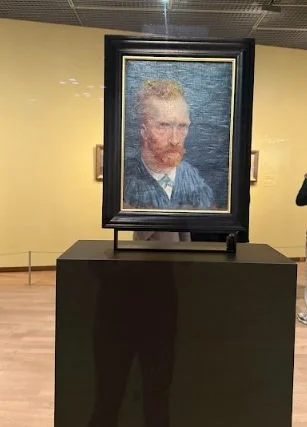
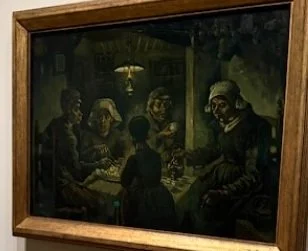
Vincent Van Gough (March 30, 1853 – July 29, 1890)
Though not particularly popular in life, he remains a well-loved and influential artist of the 20th century.
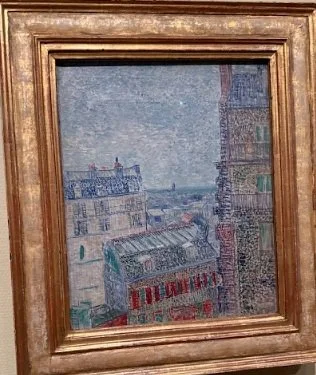
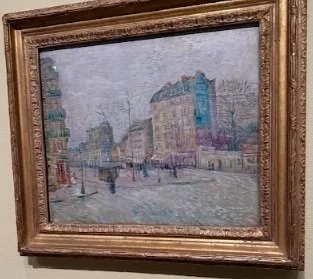
Goededag Amsterdam, Bonne journée Paris!
By Ashley L. Hunt
In January, Sarina had the opportunity of a lifetime, and went to Amsterdam and Paris! A late Christmas gift from Dr. Ted.
An old friend of Dr. Ted, Chris Hattons and his wife Samantha, have been living in Paris for the past year, and were glad to have Sarina and Ted as their very first visitors.
Chris recently retired from the prestigious Kimley-Horn planning, surveying, engineering, and design consulting firm. Samantha always dreamed of traveling Europe, and now they are living that dream in Paris.
At the recommendation of judge Michelle Sisco, Sarina spent her first few nights in Amsterdam in The Pulitzer hotel. Named for Herbert Peter Pulitzer, this historic site is a wonderful and unique hotel made of 25 converted canal houses from the 17th (and 18th) century. It was a pleasant experience all around, with comfortable rooms, friendly and attentive staff and beautiful views.
Amsterdam in January has a fresh clean cold air, so it's a good thing she Sarina hadn't put away her warm winter coat! but the people were so very friendly, it was worth braving the cold to meet the locals. Something to note while walking around is the amount of bikes parked around, as there are so very many, it's easy to lose count.
The first real stop on the itinerary was the Van Gogh Museum. Sarina took the audio tour to explore the sprawling 200 paintings, 500 drawings, 750 letters from Vincent himself. Van Gogh had such a distinctive style of painting, even those who are not enthusiastic art fans will find something they like. Born 30 March 1853 (Aries) Vincent Willem van Gogh was more interested in the life of the "Every man" around his village. While others painted famous people and popular settings, Vincent painted himself, his neighbors and his own back yard. The famous Starry Night was based on view from the east-facing window of his asylum room. Some historians believe he had Tetrachromacy; a genetic rarity that enables people to see a wider range of colors.
The next stop was Kaasbar cheese bar. If a never-ending conveyor belt of cheese isn't Heaven, I don't know what is. Offering over 30 types of local Dutch cheeses, Kaasbar is a truly one-of-a-kind places that's a guaranteed can't miss. The pair of friends who created it believed in togetherness. In pairing cheese and wine, they also wished to bring people together. If you like friendly atmospheres and love cheese, Kaasbar is the place to go.
After walking around, admiring the lights on the trees and warm cozy shops, dinner was an Indonesian restaurant called Sama Sebo. Although it only dates back to 1969, Sama Sebo holds the distinguished honor of being the oldest Indonesian specialty restaurant in the Netherlands. They are most popular for their menu of Tempo Doeloe dishes, authentic Indonesian food. The founder, Sebo Woldringh was trained in Bali, and the chefs are all well versed in Javanese cuisine. While all of it was delicious, Sarina particularly liked the rice.
From Amsterdam to Paris is one quick train ride away. It's notable that if you're looking for anything other than speed, this is not the train for you. The ride itself is pleasant, but the sights go by too fast to be admired. Due to a miscommunication, lunch was expected but never served. For someone who prefers the destination over the jouney, the Speed Train is perfect.
Christopher and Samantha were ready and waiting with the perfect itinerary for a Paris vacation.
The Hattons apartment is close enough to the historic Eiffel Tower, the view from the roof is stunning. The famous landmark of Paris was built in 1889. Currently, it stands at 330 meters (or 1,083 feet for us Americans) but was added on in March of 2022. Originally the tower was built for 1889 World's Fair, as the city celebrated the 100th anniversary of the French Revolution.
The four of them then went to grab a quick bite at a close popular and historic spot, La Campanella. It was known for years as the "Café du Cycle" as it was a popular dining choice for cyclists. While an opening date is not mentioned, it has been open for a century, and still use the classic traditional recipes for French Cuisine. No wonder it's the Hattons favorite.
Sarina and Dr. Ted were then treated to a day on the town, and with so much to see and do, it's no wonder Paris is called the City of Life.
Lunch was an amazing one of a kind experience: Bustronome. Lunch is served om a double decker bus with clear glass ceilings, perfect for sightseeing as the bus drives around the city. The food is elegant and upscale as the bus takes a route that boasts views of The Eiffel Tower (lit up when possible), Arc de Triomphe, Louvre, and Notre-Dame Cathedral, all must see landmarks of Paris.
Sarina was looking forward to a trip to the Louvre, but the workers were on Strike. The French have taken worker strikes very seriously since 1789. Perhaps next time. There are plenty of other sights to see and Sarina happily walked around the city of lights. She stopped for a somber moment of remembrance at Flamme de la Liberté (Flame of Liberty) a monument dedicated to the cherished memory of Princess Diana. There is some comfort knowing her giving spirit lives on in others, and Flamme de la Liberté is a heartfelt reminder of that.
Dinner was a palette pleasing experience at Khajuraho, a high end Indian restaurant. "Food for the body is not enough. There must be food for the soul" is the motto of this intricately decorated restaurant, with recipes described as "Ode to culinary traditions and timeless recipes" it is a love letter to the heart of India.
le-khajuraho.com/notre-philosophie
After a good nights sleep, Sarina awoke ready for anything, which is a good attitude to have for the Musee d'orsay. Victor Laloux designed the d'orsay as a bold new Beaux-Arts railway station. It was meant to be a classy and beautiful way for people to enter Paris for the worlds fair. Building began in 1898, opening in 1900.
After a slow decline during the 1920s and 30s, Musee d'orsay was preserved in the 1970 and restored to former glory. Finally, in 1986, it was repurposed to become the world's largest collection of Impressionist and post-Impressionist masterpieces. It's beautiful both inside and out. Audio guides are available in several languages. German, English, Chinese, Korean and of course, French.
Lunch was in a lovely cafe attached to the Musee d'orsay, Cafe Campana. Whimsy and wonder come together, as a pair of brothers, Fernando and Humberto Campana